Renovation money only pays off when the work fits how people actually live. In the Pacific Northwest, that means wet winters, gray light, and outdoor space that still works when the weather turns.
I’ve seen the same mistake many times. Homeowners chase trendy kitchens or big feature walls, then get a modest bump at resale. The upgrades that return more are usually practical. They solve weather, light, space, and outdoor use.
Why climate shapes renovation value
This region isn’t deep-freeze cold. It is damp. Moisture control, durable exteriors, and rooms that don’t feel dark from November to March matter more here than in dry climates.
Buyers notice a home that handles rain well. Covered entries, good drainage, and low-maintenance cladding signal lower upkeep. That helps in negotiations.
Energy upgrades matter too. Better insulation, solid windows, and smart heating may not look flashy, but they cut running costs and improve comfort. Those benefits are easy for buyers to understand.
Additions that earn their keep
More square footage only helps if it’s useful square footage. Living extensions, primary suites, and flexible second living areas usually beat novelty rooms.
When people research custom home additions in Bellevue, the strongest projects fix a real problem: not enough living space, no work-from-home area, or a kitchen that no longer works. Eastside buyers already expect quality. They pay more for smart planning, not just a bigger footprint.
Keep additions profitable with a few simple rules:
- Match the roofline and style to the existing house
- Connect new rooms to outdoor space
- Build for wet weather and low early maintenance
- Don’t overbuild far above nearby homes unless the site supports it
Layout efficiency counts. A smaller addition with better flow often beats a larger one with dead corners and wasted hallways. Buyers and appraisers both care about usable space.
Outdoor living that works in real weather
Outdoor budgets often run away fast. Fancy outdoor kitchens and heavy hardscape can sit empty half the year if there’s no cover and no clear link to the house.
In the Seattle area, deck construction Seattle tends to pay off when the deck feels like living space, not a summer-only platform. Cover, waterproofing, and rain-ready materials matter more than fancy rail details.
What usually works:
- Size the deck for real furniture and traffic
- Link it directly to the kitchen or main living area
- Plan lighting and power early
- Choose surfaces that stay safer when wet
- Design for leaves, moisture, and easy upkeep
Composite and well-built wood can both work. Detailing matters more than brand names. Weak flashing and poor joints will ruin expensive boards. Put money into structure, waterproofing, and house connection before upgrading every finish.
Kitchens and bathrooms: still core, still easy to overspend
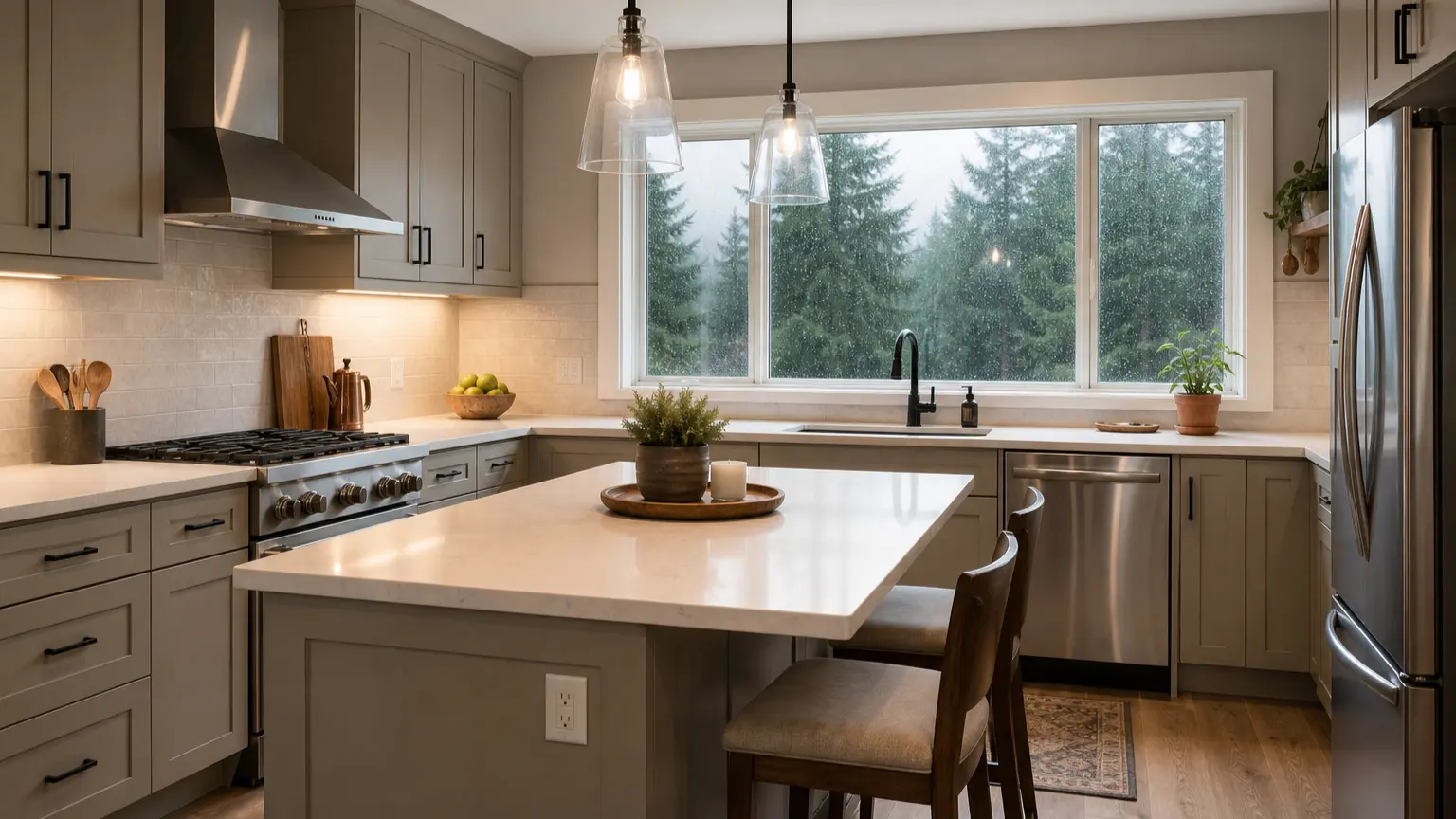
Kitchens and baths still move the needle because every buyer judges them. That doesn’t mean endless spending is smart.
Good cabinets, durable counters, strong task lighting, and a layout that works for cooking and storage usually beat statement pieces that date fast. In bathrooms, solid waterproofing, ventilation, and calm finishes beat spa-level complexity in most price ranges.
Spend where failure is expensive: wet areas, structure, and services. Spend where daily use is constant: storage, lighting, and work zones. Hold back on décor you can change later.
A common mistake is pouring the budget into one “hero” room and leaving the rest tired. Balanced upgrades across main living areas almost always present better.
Light, warmth, and the gray-month problem
Pacific Northwest homes fight low light for much of the year. Renovations that bring in daylight without big heat loss punch above their weight.
Window upgrades, well-placed skylights, wider openings between rooms, and lighter interior colors can make a home feel larger. People often miss this until they tour a house in January. Then it becomes obvious.
Choose heating and cooling for the building, not the brochure. Quiet systems, sensible zoning, and a tighter building envelope support comfort and buyer confidence. Pair mechanical upgrades with sealing and insulation. Don’t treat them as separate decisions.
What rarely pays like people hope
Not every popular upgrade is a strong investment. Highly personal design choices, niche hobby rooms, and short-life exterior finishes often underdeliver.
Big outdoor entertainment packages can be hard to recoup unless the home and price point already support that lifestyle. The same goes for converting useful rooms into one-off spaces the next owner will reverse.
Incomplete scope hurts too. A new living area without drainage fixed, a deck without weather cover, or an addition without storage can feel unfinished even after a large invoice. Return drops when the renovation story doesn’t hold together.
A simple way to prioritize budget
If you need a clear order of work, use this:
- Fix moisture, structure, and the weather envelope first
- Improve layout and living space where the home feels tight
- Upgrade kitchen and baths to a durable, market-right standard
- Build outdoor areas you can use in shoulder seasons, not only peak summer
- Add finishes and feature details only after the basics are solid
It’s not glamorous. It does stop the common failure where nice finishes hide unresolved building problems.
ROI follows climate fit and daily use. Rain-ready detailing, better light, and flexible living space beat design ideas copied from drier, sunnier regions.
Final filter before you commit
Before you lock the scope, run each major item through three questions:
- Does it fix a real problem in how the home is used?
- Will a typical buyer in that neighborhood see the value without a sales pitch?
- Will it still perform after several wet seasons with normal maintenance?
If you can’t get a clear yes, treat it as optional. The best-returning Pacific Northwest renovations don’t chase every trend. They make the house easier to live in through a long wet season, and easier to sell when the time comes.