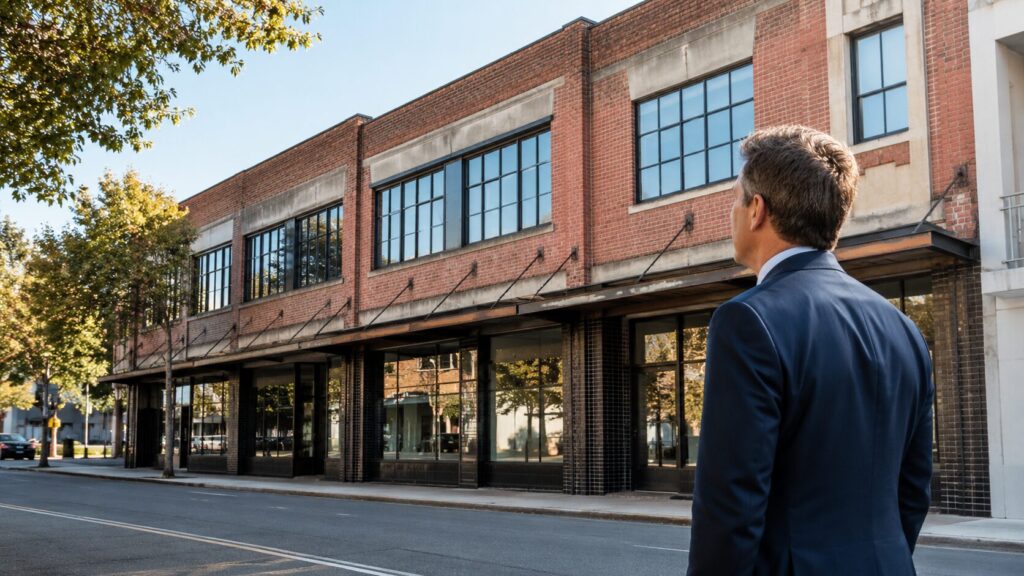
Older commercial buildings can be easy to overlook.
The paint may be tired. The layout might feel dated. There could be a few questionable ceiling tiles and an air-conditioning system that sounds like it has opinions. Yet beneath all that, an older property can still offer solid value, especially when it sits in an established location with strong tenant demand.
The real question isn’t whether the building is old. It’s whether the numbers, condition and future potential still stack up.
Location Can Carry a Lot of Weight
A well-located older building will often outperform a newer property in a weaker area.
Established commercial precincts usually come with existing transport links, surrounding businesses, steady foot traffic and a tenant market that already understands the location. Those things are difficult to manufacture. A shiny new building on the edge of town may look impressive, but that doesn’t automatically make it the stronger investment.
Older properties can also offer access to tightly held areas where new development is limited. That scarcity matters.
Still, location shouldn’t become an excuse to ignore the financial side. Purchase price, rental income, likely vacancies and ongoing costs all need careful review. Investors should also understand how property investment tax may affect cash flow, deductions and the overall return from the asset before making a commitment.
Good location helps. It doesn’t fix bad maths.
The Building’s Condition Matters More Than Its Age
A 40-year-old property that has been maintained well may present fewer problems than a 15-year-old building that has been neglected.
That’s why age alone isn’t a reliable warning sign.
The better questions are more specific. When was the roof last repaired? Has the electrical system been upgraded? Are there signs of water damage? Do the lifts, fire systems and air-conditioning still have years of useful life left?
These details can change the investment case very quickly.
One investor might walk into an older office building, notice the dated carpet and assume it needs a full renovation. Another might look past the cosmetic issues and spot a sound structure with flexible floor space and strong leasing potential. Same property. Different reading.
The bones matter more than the beige walls.
Renovation Costs Can Shift the Numbers Fast
Renovation can unlock value, but it can also eat through a budget with surprising speed.
Minor upgrades such as repainting, lighting improvements and refreshed common areas may improve tenant appeal without becoming a major project. Larger works are different. Replacing lifts, fixing structural defects or upgrading essential services can add significant cost before the property generates any extra income.
This is where realistic budgeting becomes essential.
A renovation allowance shouldn’t rely on guesswork or a best-case quote. Older buildings often reveal extra work once contractors start opening walls, removing old fittings or checking hidden systems. A sensible buffer can stop an attractive purchase from turning into a stressful one.
And yes, old buildings do have a habit of keeping secrets. Usually expensive ones.
Due Diligence Needs to Be Thorough
Older assets require careful investigation before contracts become unconditional.
Professional commercial property inspections can help identify structural movement, moisture issues, roofing problems, ageing services and other defects that may not be obvious during a short walkthrough. That information gives buyers a clearer view of what they’re actually purchasing, not just what the brochure says.
The inspection findings should also connect back to the investment plan.
A cracked wall may be cosmetic. Or it may point to movement that requires further engineering advice. An outdated switchboard might be manageable now but costly if a future tenant needs more power. Context matters.
This is also the point where legal, financial and technical advice should come together. No single report tells the whole story.
Compliance Can Become a Hidden Cost
Building rules change over time.
An older property may need upgrades to fire safety systems, disability access, emergency lighting, lifts or other essential services. Some issues won’t stop the sale from proceeding, but they may affect future renovations, leasing plans or insurance.
These costs can be easy to underestimate because they don’t always improve the building in a way tenants can immediately see.
New paint gets attention. Compliance work often doesn’t.
Yet ignoring it can create delays and unexpected expenses later. Investors should understand what standards currently apply, what work may be needed and whether any upgrades could become compulsory if the property changes use.
That last point is important. A building that works well for one type of tenant may need major modifications for another.
Older Buildings Can Offer Strong Value-Add Potential
One of the biggest advantages of an older commercial property is the chance to improve it.
A tired building in a good area may have under-market rents, dated interiors or unused space. With the right upgrades, it may become more appealing to tenants and support stronger rental income over time.
That doesn’t mean every old property is a renovation opportunity.
Some are simply worn out. Others are overcapitalised before the work even begins. The strongest opportunities usually have a clear gap between their current condition and what the market is willing to pay for improved space.
There needs to be a reason for the upgrade.
A new lobby because the old one looks dull may help. A costly redesign that tenants don’t value probably won’t.

Energy Efficiency Is Becoming Harder to Ignore
Older buildings often use more energy than modern properties, particularly when they rely on outdated lighting, glazing and mechanical systems.
That can create higher operating costs for owners and tenants.
Energy upgrades may improve the building’s appeal while reducing long-term expenses. Better insulation, LED lighting, efficient air-conditioning and smarter energy controls can all make a noticeable difference.
This growing focus on sustainability in real estate is also changing what some tenants expect from commercial spaces. Larger businesses, in particular, may consider energy performance and environmental credentials when choosing where to lease.
An older building doesn’t need to stay inefficient forever.
Sometimes, a sensible upgrade program can improve both performance and marketability without stripping away the property’s character.
Tenant Demand Still Comes First
A building only works as an investment when tenants want to occupy it.
That sounds obvious, but it’s easy to get distracted by renovation potential or a low purchase price.
The local leasing market should shape the decision. Are businesses looking for smaller offices, warehouse space, medical suites or flexible commercial areas? Does the building suit that demand, or would major changes be needed?
Older properties often perform well when they offer practical layouts, parking, visibility or affordable rents.
Not every tenant wants polished marble and a rooftop garden. Many just want a reliable building in the right place, at the right price.
That’s worth remembering.
So, Is It Still a Smart Investment?
It can be.
An older commercial building may offer strong location advantages, lower entry costs and genuine value-add potential. It may also bring larger maintenance bills, compliance issues and expensive surprises.
The best opportunities are rarely the prettiest on inspection day. They’re the ones with sound fundamentals, manageable risks and a clear reason why the property can continue performing over time.
Age isn’t the deal-breaker.
Poor due diligence is.