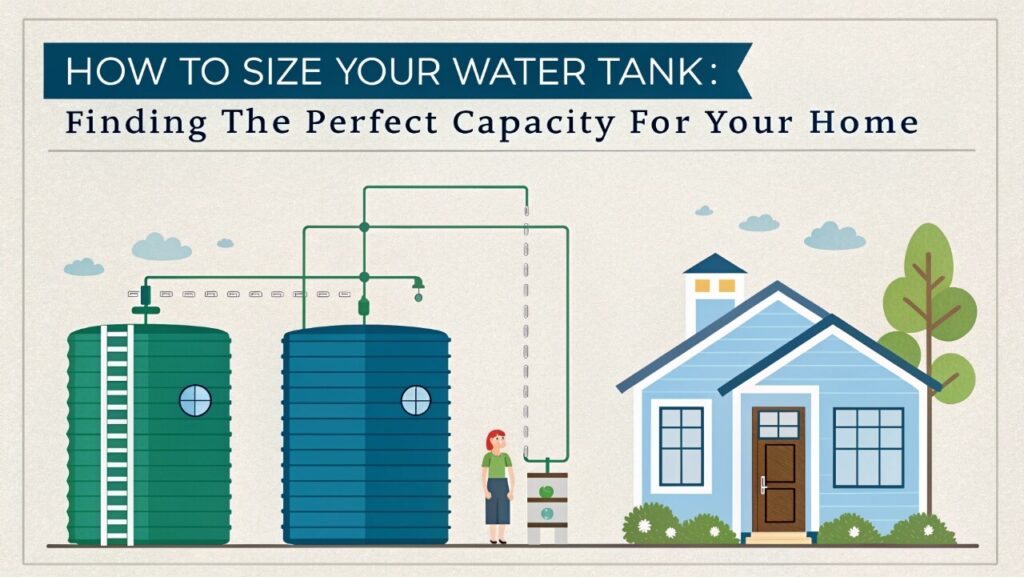
Choosing the right water tank size is one of the most important steps in creating an efficient rainwater harvesting system. The right capacity helps you make the most of rainfall, reduce your mains water use, and support sustainable living, all while ensuring your household’s water needs are met year-round.
If you’re planning to install an NSW water tank for your home, this guide will walk you through how to choose the perfect capacity based on your usage, roof area, rainfall, and available space.
1. Start with Your Water Usage Needs
The best place to start is by understanding how much water your household uses and what you’ll use the rainwater for.
If you’re only planning to water your garden or wash the car, a smaller tank may be enough. But if you want to use rainwater for flushing toilets, doing laundry, or supplying your entire home, you’ll need a larger tank.
In general:
- Small households may need between 3,000 and 5,000 litres.
- Medium households typically need between 5,000 and 10,000 litres.
- Larger families or rural homes may require 10,000 litres or more.
If you’re unsure what capacity best fits your needs, reach out to your local water tanks provider to help you select the right model based on your home’s design and lifestyle.
2. Factor in Your Roof Catchment Area
Your roof acts as your rain collector, and its size determines how much water you can harvest. The larger the roof, the more rainwater you can collect and store.
A simple formula for estimating how much water you can collect is:
Roof area (m²) × Annual rainfall (mm) × 0.9 = Total litres per year
For example, if your roof measures 200 square metres and your area receives around 800 mm of rain annually, you could potentially collect up to 144,000 litres of rainwater each year.
Of course, you won’t store all that at once, so choosing a tank that holds around 10–20% of your annual collection capacity usually provides a good balance between storage and practicality.
3. Understand Local Rainfall Patterns
Rainfall in New South Wales varies depending on where you live. Coastal regions like Sydney, Wollongong, and Newcastle receive more regular rainfall, while inland areas experience longer dry periods.
If you’re in a dry or drought-prone area, it’s worth choosing a larger tank to capture and store as much rainwater as possible during the wet season. On the other hand, homeowners in high-rainfall areas can often rely on smaller tanks that refill more frequently.
Checking local rainfall data or asking your tank supplier for region-specific recommendations can help you find the right balance between size and cost.
4. Assess Your Property Layout and Space
Your property’s layout plays a big role in determining what size and shape of tank will work best.
If you live in the city, a slimline tank may fit neatly along a wall or narrow pathway. If you have a large block or rural property, a round tank or even multiple tanks can maximise your storage capacity.
For homeowners who prefer a more discreet option, underground tanks are an excellent way to save space while still providing ample water storage.
Before choosing your tank, consider how much space you have available, where your downpipes are located, and how easy it will be to access the tank for maintenance.
5. Plan for Future Water Demand
It’s easy to underestimate how much water you’ll need in the future. If you plan to extend your home, start a garden, or add outdoor features like a plunge pool, your water demand will increase.
While a smaller tank may seem more affordable at first, sizing up slightly can save money in the long run, giving you extra capacity when you need it most and ensuring you never run short during extended dry spells.
6. Think Beyond Capacity — Quality Matters Too
Choosing a high-quality tank and efficient rainwater system can make a huge difference in long-term performance. A well-designed setup includes:
- Leaf strainers and gutter guards to keep debris out.
- First flush diverters to maintain cleaner water.
- Filtration systems for safe household use.
- Pump systems to provide consistent water pressure.
A quality system not only lasts longer but also ensures every drop of water you collect is usable and safe.
7. Maintain and Repair for Longevity
Even the best water tanks need occasional maintenance to stay in top condition. Over time, debris, sediment, and minor leaks can affect performance and water quality.
Regular inspections and cleaning help extend your tank’s lifespan. If you notice cracks, leaks, or reduced water pressure, it’s best to address the issue early. For professional maintenance and reliable restoration, it’s best to contact an expert in water tank repairs who offers professional repair services to help keep your system functioning efficiently without the cost of a full replacement.
8. Check Local Regulations and Rebates
Before installation, check your local council’s rules about connecting rainwater tanks to your home plumbing or stormwater system. Some councils across NSW also provide rebates or financial incentives for homeowners who install rainwater tanks that meet certain efficiency or safety standards.
Your supplier can help guide you through these local requirements to ensure your tank installation is fully compliant.
Choosing Your Water Tank Gets Easy Today!
Finding the perfect water tank size is about understanding your water needs, property conditions, and local environment. By considering your household usage, rainfall, roof size, and available space, you can invest in a system that delivers lasting savings and sustainability.